

Claire Cummins
Claire’s Journey from IDOH to the Pharmaceutical Industry
After graduating from IDOH, students can choose from a wide array of diverse career paths. To give a bit of insight into this
process, in this section we are asking some IDOH alumni about why they applied to IDOH, how they enjoyed it, and what they
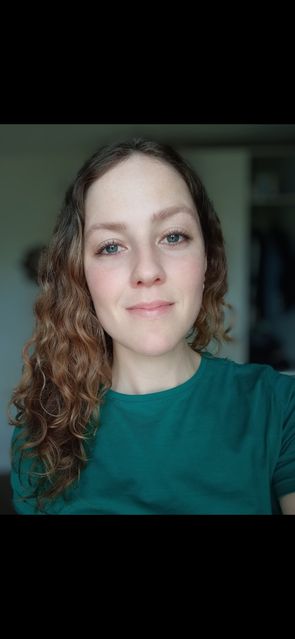
did afterwards. Meet Claire Cummins, an IDOH Alumni from Cohort 4, who graduated in 2022. Claire is a Biomedical
Scientist with a rich background as a Medical Laboratory Scientist for the Irish health service. Since graduating, she has
transitioned into the pharmaceutical industry, where she continues to make an impact. Like that of many alumni, Claire’s
journey is a testament to the value of interdisciplinary learning, international collaboration, and the real-world impact of One
Health. We are thrilled to share her journey with you!
The world of One Health is multidisciplinary by nature, it interconnects many different disciplines. Besides theoretical immunology, students learn a variety of laboratory and data analysis techniques that are applicable across industries, so take all these opportunities to learn these important skills.
IDOH also broadened my understanding of global health systems, exposing me to different approaches to healthcare, pharmaceuticals, and public health policy across countries, as well as the unique infectious disease dynamics of different regions.
Why did you apply for IDOH?
My passion for infectious disease research led me to the IDOH program. During my time as a medical scientist for the Irish Health Service and my clinical research internship focused on developing an HIV vaccine, I became interested in pathogen transmission—both from a laboratory research perspective and in terms of epidemiology and disease spread.The IDOH master’s program stood out to me because of its comprehensive and diverse curriculum, which aligned with what I find interesting. While the One Health concept was new to me, I was eager to explore science from a holistic perspective, by studying how human, animal and environmental health relate to one another. Another major draw was the program’s
international aspect. Like many other students, I was excited about traveling, experiencing new cultures, and meeting people from different backgrounds.
What have you been up to since graduating from IDOH?
After completing the program, I returned to the pharmaceutical industry, preferring its structured environment over academia. I find it incredibly fulfilling to see the direct applications of my work rather than focusing purely on theoretical research. I started as a scientist in the cell and molecular biology lab for a CRO, then moved into analytical development, and now work as a Quality Assurance (QA)-specialist in technical
support for manufacturing. This is my first industry role outside of the lab, and I’ve found that what I learned in IDOH directly supports my work in biologics manufacturing. Understanding pathogen transmission and control measures has been invaluable in ensuring product safety, sterility, and regulatory compliance, as well as in conducting technical risk assessments. QA is a highly collaborative department, working closely with Manufacturing, Science and Technology (MSAT), process sciences, and quality control teams. The strong communication and adaptability skills I developed through IDOH’s international experience have been essential in navigating these cross-functional interactions effectively.
That sounds like interesting work! Is there anything you’re particularly proud of?
While working as a scientist in the Cell and Molecular Biology team at a CRO, I had the unique opportunity to develop an assay that transitioned from pure R&D into a fully GMP-compliant, validated method. The assay—a hemolysis-based immunoassay—was entirely new to me, but the real challenge lay in adapting an academic research method to meet the rigorous standards of GMP testing for a future drug. After numerous modifications and optimizations, we refined the method to ensure compliance. By the time I completed my role, the assay was fully validated,
making the experience both rewarding and highly satisfying. I played a crucial part in translating scientific research into a practical, industry-ready tool!
How did your education contribute to your success in this field?
During our semester in Tours, we received an excellent grounding in immunology, which was instrumental in my ability to develop and validate this immunoassay. The IDOH program emphasized translational research—bridging scientific research with real-world applications—which directly aligned with my experience of adapting an R&D assay to a GMP-compliant method.
What’s next for you? Anything exciting ahead?
I’m excited to continue growing within the pharmaceutical industry and applying what I learned in IDOH. As I gain more experience in QA and develop a deeper understanding of the industry, I see myself moving into regulatory affairs and pharmaceutical policy to ensure drug safety for
both humans and animals. I’m also particularly interested in enhancing my knowledge of and experience within R&D that drives the industry, especially in antibodies, cell and gene therapy, and CAR-T cell therapy. There’s so much to explore, and I’m looking forward to the journey ahead!
Is there a key lesson from IDOH that has stuck with you?
One of the most valuable lessons I learned is actually one that is fundamental to the One Health approach that IDOH teaches students: diseases don’t exist in isolation—zoonotic outbreaks,antimicrobial resistance (AMR), and environmental factors all play a role in shaping public health. IDOH also broadened my understanding of global health systems, exposing me to different approaches to healthcare, pharmaceuticals, and public health policy across countries, as well as the unique infectious disease dynamics of different regions.
What advice would you give to someone considering a similar career path?
The most important advice I can give to anyone potentially interested in IDOH is to keep an open mind. The world of One Health is multidisciplinary by nature, it interconnects many different disciplines. Besides theoretical immunology, students learn a variety of laboratory and data analysis techniques that are applicable across industries, so take all these opportunities to learn these important skills. Enjoy the international experience – immerse yourself in learning about your classmates’ different cultures and make the most of the travel opportunities. The international aspect is just as valuable as the academic one!
Finally, how do you look back on your days as an IDOH student?
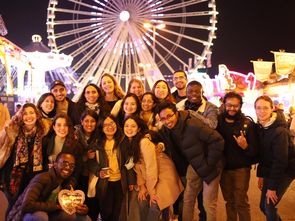
Our IDOH cohort was particularly close, and I always look back on that time with nostalgia. Some of my favorite memories were our international food nights, where each of us brought a national dish to share—of course, I had to make Irish stew! Another unforgettable night was in
Hannover, Germany, where we all made pani puri together. It felt like a factory line during preparation, but we ate them just as fast! It was such a special group, and I cherish those moments we shared across three different countries.